
By Brett Jones
Permaculture Basics
At its heart, permaculture is far more than just “organic gardening”. It is a design science based on the idea that we can meet human needs while increasing the health of the planet.
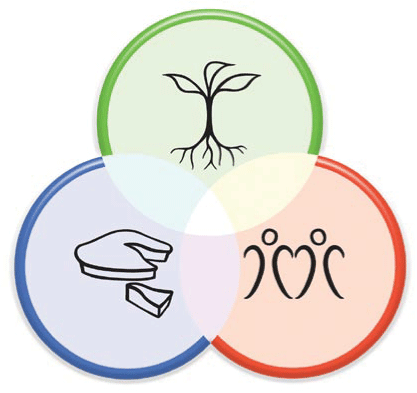
The fundamental philosophy is built on three Ethical Pillars and a set of Design Principles. Together, they provide a framework for solving problems—whether you are designing a farm, a business, or a community project.
1. The Three Ethics
Any system designed using permaculture must satisfy these three core values. If one is missing, the system is not sustainable.
- Earth Care: Rebuilding natural capital. The design should ensure that the soil, water, and biodiversity are healthier after your intervention than they were before.
- People Care: Meeting human needs for food, shelter, and community in a way that is equitable and healthy.
- Fair Share (Return of Surplus): Taking only what we need and reinvesting the surplus (time, money, or energy) back into the first two ethics. It’s about recognising that there are limits to growth.
2. Core Philosophies in Practice
When applying permaculture to a problem, these four “mindsets” are usually the first point of entry:
Working With Nature, Not Against It
Rather than trying to force a system to do something it doesn’t want to do (like using chemicals to kill weeds), we look at why the “problem” exists. A weed is often nature’s way of covering bare soil; instead of fighting it, we plant a ground cover that we actually want.
The Problem is the Solution
This is perhaps the most famous permaculture maxim. It encourages us to look at a “problem” as an untapped resource.
Example: If you have an abundance of slugs, you don’t have a slug problem; you have a duck deficiency. The ducks eat the slugs, turning a pest into high-protein eggs and fertiliser.
Minimum Effort for Maximum Effect
In permaculture, we look for the “leverage point”. Where can we make one small change that results in a massive positive ripple effect? This often involves careful observation before taking any action.
Everything Feeds Everything Else
In a well-designed system, the output of one element becomes the input for another.
- In a garden: Kitchen scraps (output) become compost (input) for the soil.
- In an office: A “problem” of excess shredded paper (output) becomes bedding for a worm farm (input) that creates fertiliser for office plants.
3. How to Apply it to a System
To solve a problem using this philosophy, you follow a specific design flow:
- Observation: Spend time simply watching how the system works without interfering.
- Analysis: Identify the resources (inputs) and the products (outputs).
- Integration: Place elements in a way that they support each other (e.g. placing the woodpile near the door so you don’t have to walk through the snow).
- Feedback: Small-scale trials. See how the system reacts and adjust.
Permaculture principles can be applied to almost anything. Over the next few months, I will be writing about how I apply these principles to systems and areas you may never have considered. Next month, I will focus on money—specifically, financial systems. Your income, expenditure, and investments form a personal financial system that can benefit significantly from a permaculture approach.
Permaculture is a philosophy of working with, rather than against nature; of protracted and thoughtful observation rather than protracted and thoughtless labour.