
By Joanne Cho
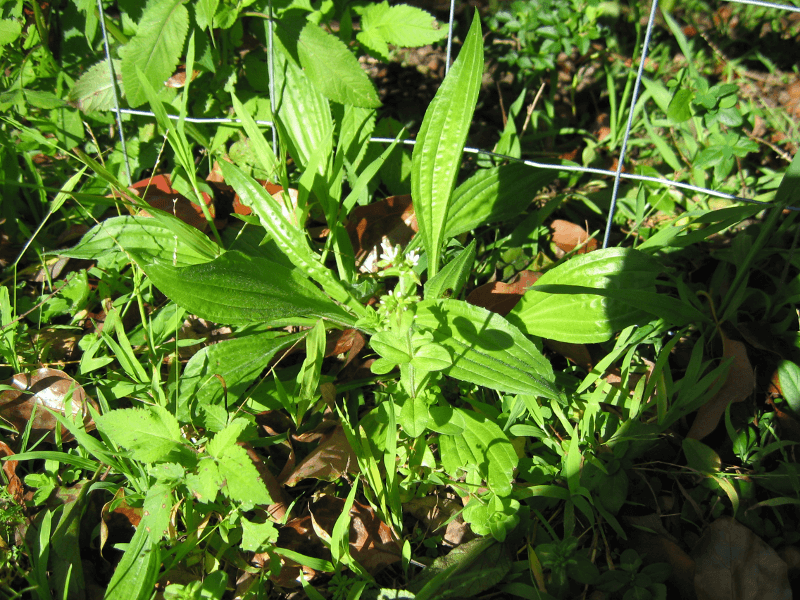
What goes through your mind when you spot some unfamiliar weeds in your garden? Do you have an instinct to eradicate, or do you take a breath and wonder where these all fit and what useful outcome you may be able to create?
Today, as I write this article, I realise what truly constitutes a rich human life—one that grows from a rich ecology and cannot be measured by GDP or GNP.
As children growing up in the rural outskirts of Seoul, South Korea, we lived in tune with the seasons. Life was mindful and abundant. Food was everywhere, but only those who knew when to harvest could enjoy it fully.
In March and April, we would roam the hills and mountains in our village to forage wild greens: wild lettuce, shepherd’s purse, mugwort, plantain, and amaranth, to name a few. We learned to identify these plants over our mothers’ shoulders, then, as we had more time in our little hands, we voluntarily harvested them for our families. There was no competition — there was more than enough for everyone.
Depending on the season, we also gathered raspberries, kudzu roots, acorns, chestnuts, and hazelnuts. Wild berries, though, rarely made it home; their sweetness was impossible to resist, as you can imagine.
In spring, the village transformed into a canvas of pink, yellow, and green. Pink “jin-dal-lae” flowers, similar to azaleas but edible, and golden “gae-na-ri” blooms, resembling forsythia, covered the hills. Their vibrant colors stood in stark contrast to the snow white and grey of winter. Suddenly, life seemed to explode in colour and energy.
April and May brought tadpoles in the rice fields. I watched in awe as their hind legs grew first, followed by their front legs. Their tails mysteriously vanished once their legs were fully formed. I didn’t know then that in times of scarcity, tadpoles might eat each other, even their own tails, for survival. Can you imagine humans born with extra body parts, just in case we get too hungry?
Sometimes, my friends and I caught frogs and locusts. We roasted frog legs and whole locusts over an open fire, savouring smoky, crispy treats. These simple feasts, shared with friends, were our soul food — enjoyed freely, without adult supervision, deep in nature.
Summer and early autumn brought dragonflies in shades of red and brown. We called the red ones “go-choo jam-ja-ri” (chilli dragonfly) and the brown ones “daen-jang jam-ja-ri” (miso-paste dragonfly). Food and ecology intertwined: I often caught a dragonfly, kept it in my bedroom while I admired it for a few hours of their flying and later released it. It was also one of my childhood’s gretest pleasures to rescue them from cobwebs outoodr, delighting in watching them soar into the blue sky, free.
The scent of tomato leaves in summer was unforgettable — so intensely fragrant that no rose could rival it. I saw the clever red chilli dragonflies perched on red tomatoes, safe from predators as they camouflage. Their wings folded as if they were having a sweet snooze, forgetting about all the worries in the world.
We played in crystal-clear creeks, flipping rocks to discover orange yabbies hiding below. I would watch and admire them rather than trying to eat them, fascinated by their tiny, perfect world. On summer evenings, fireflies lit my reading as I collected them in glass jars — a necessity in a village without electricity.
In the evenings, I often saw and heard beautiful owls, and occasionally snakes during the day. I never encountered a single mouse or large numbers of flies, slugs, aphids, or other pests in the village. Although they are part of the food chain, an outbreak of any of them would signal that the ecosystem is out of balance.
Autumn meant chestnuts and sweet potatoes. My brothers and I harvested chestnuts, peeling their prickly shells with our feet and sticks and roasted them over bonfires. We revelled under the crisp, blue autumn sky, taking some chestnuts home for the next day as well. Sweet potato harvests in a family friend’s farm felt magical — my little 6-year-old hands pulling one vine could yield hundreds of purple potatoes one after the other, reminiscent of childhood dreams that I had where every step unearthed gold coins.
Winter brought ice and snow. We sledded and skated on frozen rice fields, quenched our thirst with icicles from nearby houses, and warmed ourselves with roasted sweet potatoes and chestnuts.
These were my memories until age seven. Afterwards, our family moved to the city, and I slowly drifted away from nature. Yet the village lingered in my dreams, a sanctuary I could never forget.
Now, in Australia, I feel that same instinct to connect with nature. But the ecosystems are different here, so I proceed cautiously. I photograph weeds, identify them with apps, and study them deeply. Childhood memories give me faith that these “weeds” are gifts — nutritious foods that link us to the Earth, fostering belonging and gratitude.
Today, I miss that village with all my heart. The village my father named was marked with a four-leaf clover on its gateway milestone. The village where organic farming thrived, where creatures flourished, where children explored freely. The village where people lived in mutual respect, mindful of the seasons, and embraced abundance. A village without supermarkets yet overflowing with generosity and connection. That village lives in me, a timeless echo of harmony between humans and the natural world.